Showing posts with label Every Child Ready to Read. Show all posts

Wednesday, December 19, 2018

The Bookworm

I recently discovered a great new resource for stoytime—The Bookworm, a monthly publication from the Idaho Commission for Libraries.  They offer three newsletters each month focusing on Babies and Toddlers; Preschoolers; and Kindergarteners.  Each 2-page newsletter has book suggestions, rhymes or songs, and using the 5 practices—singing, talking, reading, writing, and playing with children.  Each month they focus on a specific practice and uses terms from Every Child Ready to Read 1st Edition—narrative skills, print awareness, print motivation, vocabulary, letter knowledge, and phonological awareness—to teach parents and caregivers about the importance of early learning.  I love the “Here’s How…” section that gives easy, everyday ways parents can help foster early learning.  These would make great parent tips during storytime!

Here is the link to check-out this great resource!

Friday, June 17, 2016

New Storytime Resource Books

An internal blog post

Have you seen theses two new storytime resource books?


Time for a Story: Sharing Books with Infants and Toddlers by Amy Read and Saroj Ghoting


Supercharged Storytimes: An Early Literacy Planning and Assessment Guide by Kathleen Campana, J. Elizabeth Mills, and Saroj Nadkarni Ghoting

I love how both of these resources address background information and research about early learning and how storytimes at the library can really address the skills children need to develop.  Such terms as phonological awareness, print motivation, alphabetic knowledge, and vocabulary are used to teach us, the storytime presenters, what skills we can strive to develop during storytimes.  However, both of these books also address Every Child Ready to Read’s five practices:  Singing, Talking, Reading, Playing and Writing which are easy for storytime presenters to explain to parents and caregivers. 
I love how the skills and the practices are two sides of the same coin.  As storytime presenters we need to understand both sides of the coin; however, when we talk to parents and caregivers about things they can do at home with their children we just have to talk about the five practices and how they support early learning.  Singing, Talking, Writing, Playing and Writing are vehicles that lead to skills identified through VIEWS 2:  communication, language use, comprehension, print concepts, alphabetic knowledge, and writing concepts in addition to the six skills from ECRR1: phonological awareness, vocabulary, print motivation, narrative skills, print awareness, letter knowledge.
Although the majority of Time for a Story discusses specifics about doing storytime with infants and toddlers, there is a great table near the back of the book that would be beneficial for all storytime presenters to look at:  Story-Time Ideas and Book Sharing for Each Component starting on page 112.  The chart lists the skill and its description, ideas for how to use it at storytime, book characteristics that support the skill, and tips about sharing the book.  There are also sample parent tips starting on page 133.
Chapters 2-6 in Supercharged Storytimes highlights one of the five practices and takes us through what a storytime would look like for children ages birth-18 months, 18 to 36 months, and 36 to 60 months, highlighting the skills through each of the practices.
If you haven’t had a chance to look through these new resources I would encourage you to do so! 

Sunday, October 18, 2015

Supercharged Storytime Webinar

Several weeks ago I was asked to do a 10-minute presentation during the 2nd round of Supercharged Storytime Training through WebJunction.  My topic was "How do I incorporate alphabetic knowledge in storytime?"  I was so excited to participate in this live webinar with children's librarians from five different states!  Here is my presentation.

Earlier this year I was able to go through supercharged storytime training through a webinar and some in-house training with my Early Learning team.  It is wonderful to know that that storytimes the library provides do, in fact, have a positive impact on children and their learning.  That research validates my work and also energizes me to plan meaningful storytimes for our youngest library members. The main thing I have learned from Supercharged Storytime training I can sum up in one word—and that is intentionality!
For me supercharged means to be more intentional in planning storytimes.  It means to take a little time to identify the things I am already doing and extend or expand those things.  It also means to always be on the look out for ways to enhance storytime using supercharged principles.  Because I take a little time to identify early learning skills during my planning I feel prepared to share those things with parents and caregivers during storytimeIt really doesn’t take much time to supercharge your storytime, just a little thought and planning.  However, supercharged elements greatly enhances your storytime. 

Today I will share with you just a few ways I emphasize alphabetic knowledge in storytime.
The first, and most basic way I share alphabetic knowledge with my all ages storytime group is to sing the ABC Song every week as part of our welcome song.  I made up this little song about storytime before we sing before actually singing the ABCs; but that, of course, is optional.  I have a large ABC chart that I display and I use a pointer to point to each letter as we sing it.

 I make a concerted effort to really slow down during the L-M-N-O-P (the pointer helps) to help the children distinguish between the letters.

 With older children I have done the ABCs in a chant, which helps children pay attention to the letter names and to the printed letter.  Again I point to each letter as we say it.
ABC Chant
A...B...CDE
F...G...HIJ
K...L...MNO
P...Q...RST
U...V...WXY
Now it's time to say goodbye
Zzzzzzzzz!

Mel’s desk has an idea page about other tunes you can sing the ABCs to for additional alphabet practice.

I love to use the Bingo song as a way to emphasize alphabetic knowledge.  I like to change it up for all kinds of themes—just about any 5 letter word will work.  Some I have done are…
Teddy, rainy, piggy, green, hippo

Children are drawn to the first letter of a word when they are learning about words in print.  One of the first letters they learn is the first letter of their own name.  That first letter in any word is so important. 

So I mix up Bingo by taking letters away from the end of the word, so that first letter is emphasized. Another advantage to this is you can read shorter words that made up the longer word—rain, pig, ted.  I’ve done this for several years and found it works wonderfully well.

Whether you do the traditional or revised BINGO song, be sure to have the letters displayed on a flannel or magnet board and pointing to each letter as you sing it.  This helps to reinforces alphabetic knowledge.

Anything I found to be helpful when emphasizing alphabet knowledge in storytime is to use books with alliterations in title.  This is a cue for me to point out the first letter in each word, make an observation that they are the same, ask the children if they know the name of the letter, name the letter, make the letter’s sound and emphasis that letter sound while reading the title again.

Today we are going to read a book called Silly Sally by Audrey Wood.  Hey, I just noticed that the words in the title, Silly Sally, both start with the same letter.  Who knows what letter this is?  The letter S.  It sounds like /s/.  /s/ Silly /s/ Sally.  Let’s find out what Sally does that is so silly!
The same thing could be done with The Very Lazy Ladybug and other books that have alliteration.

I also love to point out alliterations in the text.  This means you cannot read the book straight through; however, pausing to point out the alliteration in the text can help children pay attention to a repeating sound.

One example is Jane Yolen’s Off We Go!  Each animal has an alliteration about how it is getting to grandma’s house.  For example, the mole digs his way to grandma’s.  Mole really likes the letter d /d/.  He goes “dig deep, diggigty deep”.  I encourage the children to say it with me.

Of course, children learn best when they are playing—so, time permitting, allow children opportunities to play with letters!  Here are some of the alphabetic knowledge activities I do with children.

Playdough with letter cookie cutters
Stamps
Magnet letters

These are very simple activities, but they give children hands-on experiences with letters.  You’ll notice that children gravitate to using letters to “write” their name.

Finally, I just want to share with you a few websites that I use as resources to find alphabetic knowledge ideas to use in storytime

I love to reference Preschool or homeschool blogs and websites.  Two I often visit are The Measured Mom and Playdough toPlato.  They have specific pages with ideas and links to fun ways to play with and learn the alphabet.

I avoid “write the letter worksheets”—instead I look for interactive, playful, and hands-on activities.
 I have also gathered a lot of ideas from Pinterest.  I’ve made an alphabet activity board so I can readily store and retrieve ideas.


Thank you for the opportunity to share with you a few ideas about implementing alphabetic knowledge into your own storytimes.  As you can see, it doesn’t take a lot of extra time, just some extra thought. 

Friday, January 10, 2014

Every Child Ready to Read: Playing


On Tuesday I presented an hour long workshop at Parent Connections focusing on play...and how play supports the development of early literacy skills.

Here are some of the information I shared with the --- parents who attended:

You may ask yourself, “How does playing help children get ready to read?”  The answer—in a lot of ways.  Today we will be talking about play and how it supports early literacy skills that help children read and become successful students.

Much research has been done in regarding to children and play.  I won’t bore you with all the details, but I want you to understand that the things we’re discussing today are based on research. 

Play for children is not just being left alone with toys.  Parents and caregivers are key in establishing meaningful and rich play that supports early literacy skills.

For this presentation play is NOT any kind of interaction with electronic devices:  TVs, DVDs, video games, computer games, iPads and other hand-held devices.  Research has shown that children need to be limited in the amount of screen time they have, for a variety of reasons…one of which is literacy development. 

“Children and teens should engage with entertainment media for no more than one or two hours per day, and that should be high-quality content. It is important for kids to spend time on outdoor play, reading, hobbies, and using their imaginations in free play.
Television and other entertainment media should be avoided for infants and children under age 2. A child's brain develops rapidly during these first years, and young children learn best by interacting with people, not screens.”

The library has many resources about quality play for children including these books:

·         Unplugged Play
·         Playing Together
·         Baby Smarts

These will give you additional ideas of play activities to do with your child and play experiences for your child to engage in on their own or with other children. 
  • Play with parent/adults
  • Play with peers
  • Play alone

High quality play—raising the level of play
Play that encourages language—talking, telling, explaining, negotiating, questioning, repeating…

Developing oral language skills has direct correlation to learning the written word.  The more words a child knows, the ability to rhyme, the ability to retell a story, identifying differences, and so forth all build a foundation for reading.          

Dramatic/pretend play is high level of play that supports the development of oral language—which supports written language.

Toys that encourage pretend play: dolls and stuffed animals, doctor kit, kitchen items, “tools”, doll house, puppets, dress-up, boxes, blocks, playdough

·        Using props imaginatively—boxes, blocks—as props to encourage more language (this is my phone, etc.)
                                Don’t always use realistic props
                                Use combination of realistic, symbolic, and unstructured props

·         Learning Symbolic Representation
                                Using objects that represent other objects (play dough for food, etc.)


Expanding Play Themes
                Introduce children to new settings and experiences
                                Field trips—out in the world!
Bakery, pizzeria, library, grocery store, bank, restaurant, zoo, farm, farmers market, forest, fire/police station, museum (not too long!), construction site

TALK while on the trip; ask questions; when you get home talk about these trips—what did they like? Questions so they can explain experience in their own words. Create play items around the experience


                                Carefully selected video clips (construction workers, spaceship, ocean, etc)


Parent’s role is to now help establish a way for children to “play” out the experience.  Children will need some support and encouragement to try something new.  Give children cookie cutters, cookie tray, pot holders, spatula, bowl, spoon, etc. so they can pretend bakery.  Offer paper and pens so children can make a menu for a restaurant.  Give them access to items they may not know about or have ready access to.  Often parents can get the kids started and then back away.  Adult interaction is important and good, but playing alone and just with peers is also important!  When playing with children don’t dominate the play—if child gets in a rut introduce a new element.  Encourage

Play around books
An additional way to add literacy into play!!

Sharing Books—similar story with different illustrations—act out stories (make own props, puppets, etc.), experiences related to book

Example:  Little Red Hen (language—same story with different characters/illustrations and slightly different words)

                Talk about the different animals in each story
                Play with wheat (sensory table), plant wheat
                Grind wheat
                Make bread (watch yeast)—kneading, watch rise, bake, cut, eat!
                Retell story—with props, stick puppets, etc.

Example:  Chicka Chicka Boom Boom
                Magnetic letters (on cookie sheet, fridge, etc.)
                Matching capital and lower case

                Write letters
                Re-read the book to self


Example:  I Love Bugs

                Connect with non-fiction book(s)
                Bug Counters—don’t have—cut out pictures to sort
                Magnifying glass – if they get tired of bugs, look at other things!
               
Example:  Mouse Paint
                Eye dropper/food coloring water
                Paint in Ziploc
                Fingerpaint        

Wednesday, September 11, 2013

Preschool Storytime to Start!


Preschool Storytime will start again on September 18.  We will run two sessions again this year--Wednesdays at 10 AM and repeated on Thursdays at 10 AM.

The format will be similar to past years--a letter a week approach.  However, this year I am changing things up a little bit and making each letter more of a theme.  For example, our first week is going to be "A is for Apples (and other things we eat!)".  


 During the first part of storytime we will focus mostly on the letter, its sound, and words that start with that letter.  The rest of storytime will focus more on the theme for the day.  Following storytime children and parents/caregivers are invited to stay and participate in enrichment activities.  These activities will include such things as playdough, coloring, cutting, gluing, imaginative play, games, and other "expereince" type activities.  Children can choose to do all, or just some of the activities.  Parents are encouraged do the activities with their child and enjoy time together.  This is also a time for children to interact with each other and for parents to talk with other parents.

Preschool Storytime will incorporate all of five elements of Every Child Ready to Read:  singing, talking, reading, playing and writing.  These practices help to build a foundation for future reading and learning...and they are all fun and easy to do!


Every Child Ready to Read® @ your library®, PLA and ALSC logos are registered trademarks of the American Library Association and are used with permission.

Wednesday, September 4, 2013

Every Child Ready to Read Overview

Last week I presented an overview of Every Child Ready to Read to parents involved in the Bellevue Public Schools program "Parent Connections".  I developed this program with the help of Every Child Ready to Read, as well as my own knowledge gained from study and practice.

I began the workshop by stressing the important role the parent(s) have as their child's first teacher and also that the practices I will be talking about are probably things they are already doing or things that can easily be incorporated into their day.  As parents strive to be more mindful their interactions with their child, early literacy skills can easily be introduced and emphasized.

Often new parents feel awkward talking to an infant or singing silly songs to a toddler.  But as parents understand the importance of early literacy skills they will begin to do these important activities with their child and soon those actions become natural as they see the benefits.

I think it is so important for parents to understand that they do NOT need special equipment and they can start where ever they are.  It's never too early...or too late...to begin using these five practices that build early literacy skills in children.

Talking
Talking is not talking to a child, but talking with a child.  Using conversational style talking and listening--allowing a baby to respond in gurgles.  It is asking children questions that get them talking instead of asking questions that a child can respond to with a nod or a simple yes or no.  Parents can easily build vocabulary by expanding on what a child says.
Parent:  "What do you see out the window?"
Child: "Car"
Parent: "I see a big, blue car driving down the street.  It is driving very fast!  What else do you see?"
...and so forth.

Use wordless or nearly wordless picture books so the child can "tell the story" and you can ask questions, listen, and respond to the child.  One of my favorite nearly wordless picture books is Good Night, Gorilla  by Peggy Rathmann.


The pictures tell of the story of a little gorilla unlocking the zoo cages, letting all the animals out!  Children can talk about what the gorilla is doing, what animals are at the zoo and what they think will happen.  

Singing
I love how singing slows down language and we begin to hear individual sounds!  First, I had the group say say the rhyme "Twinkle, Twinkle Little Star".  Then we sang it.  We all noticed the rhythm and the syllables and individual sounds.  We also noticed that it took us over twice as long to sing it as to "say" it.  

I recommended listening to children's music in the car, at bed time, and during play.  The library has many children's CDs they can borrow.  We also have many books that can be sung.  Two examples:

Raffi has all kinds of songs into books, such as The Wheels on the Bus

and books by Iza Trapani, such as The Itsy Bitsy Spider.

I also spent a little time discussing how to create "piggy back" songs--taking a familiar tune and changing the words.  For example:  use the tune of "Mary Had a Little Lamb" and change the words to fit the situation, such as, "Now it's time to clean up toys, clean up toys, clean up toys. Now it's time to clean up toys so we can eat our lunch!"  Singing instructions is so much more fun than yelling them (for parent and child!)

Reading
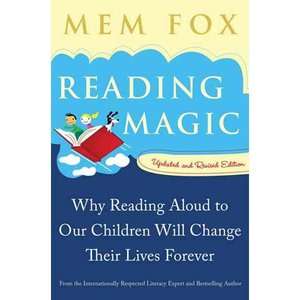
As Every Child Ready to Read emphasizes, "Reading together with your children is the single most important way to help them get ready to read."  I also stress to keep the reading experience positive.  Keep it fun and enjoyable!  Don't force a young child to sit and listen--instead make it a bonding experience--something they look forward to!  Two books I showed the parents, both by Mem Fox, Reading Magic: Why Reading Aloud to Our Children Will Change Their Lives Forever


and her picture book, Time for Bed.


And although parent usually groan when I remind them that re-reading books is very good for children, I stress it nonetheless.  Because re-reading books is vital for children to begin to understand that the words in the book will always tell the same story in the same way.  Children may even memorize the book and can then "read" the book to you!  This is a perfect opportunity to then point to the printed word as they "read", thus making another connection with print.

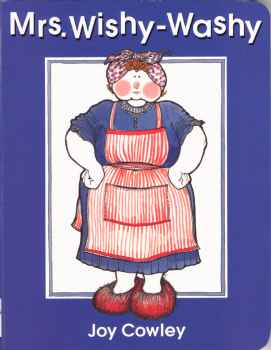
Try reading books that have repeated phrases, actions, movement or singing.  Mrs. Wishy-Washy is an example of a book that uses a repeating phrase that children can join in on or "read".

Nursery rhymes are also a great thing to read aloud to children.  They are short, fun, and easy to remember.  Since they rhyme the parent can leave off the last word of a line and allow the child to fill it in, such as: "Little Bo Peep has lost her ______."  Through nursery rhymes we also introduce new vocabulary that we can discuss together.  What is wool, master and lane in "Baa, Baa Black Sheep?"  I love Favorite Nursery Rhymes from Mother Goose, illustrated by Scott Gustafson.  The illustrations are full page and beautiful!  The library has large variety of Mother Goose to choose from.

Finally, I stressed the importance of continuing to read aloud to their children even when they learn to read on their own.  I learned from personal experience that reading loses much of its fun when all you are doing is sounding out words!  Here is part of my "reading journey".   So I stress to parents the great opportunity to continue to share books together as their child learns to read.  I recommended Jim Trelease's The Read-Aloud Handbook which has excellent read aloud suggestions.


Writing
Writing is not just copying letters on a worksheet!  Writing is using crayons, pencils, markers, chalk, paintbrushes, etc. to express themselves.  Writing to learning that one can put symbols on paper of what is said and then someone else can then read it.  One of the first things a child learns to write is their name, which is important to them.  Children should be supported in all their writing efforts--from scribbling to "making marks" to trying to make letter shapes to first letter of the word writing.  These are all stages a child goes through on their writing journey.

Writing also involves developing small motor skills.  This may look a lot like play--puzzles, blocks, beads, cutting with scissors, and playdough.  These kinds of activities strengthens their fingers and hands so they can control the writing utensil.


Playing
(By this time my hour was almost up, so here is what I emphasized to the parents)
Imaginative play is vital--pretending to cook, shop, take of a baby.  This is the best kind of play for toddlers and preschool children.  Keep "screen time" to a minimum, which includes TV, DVDs, computer games, and hand-held devices.  Parents should strive to buy toys that encourage unstructured play such as blocks, balls, playdough, and pretend play toys.

I will be doing another Every Child Ready to Read presentation in October.  I will be focusing on one of the five practices.